
Andreea-Loreta CERCLEUX
Andreea-Loreta Cercleux is Associate Professor PhD Habil. at the University of Bucharest, Faculty of Geography and senior researcher at Interdisciplinary Center of Advanced Research on Territorial Dynamics (CICADIT), Bucharest, Romania. She graduated in 2002 the Faculty of Geography from University of Bucharest and the next year she followed a Master degree in France, University of Angers, studying disciplines belonging to History, Geography and Law Sciences. She has a PhD Degree in Geography since 2008 and obtained in 2017 habilitation for coordinating PhD students in Geography. Her previous and current research interests are focused, among others, on deindustrialization and industrial heritage, tertiarization, urban regeneration and interculturality. She is the promoter of geographical research of graffiti and street art phenomenon in Romania. Her researches and publications are focused on the analysis of graffiti and street art phenomenon in different urban areas in relation to socio-economic processes that cities are going through. She followed research internships at University of Brest, University of Nice, University of Potsdam and University of Angers and teaching activity at University of Łódź. She was involved in national and European projects as local director and was member in more than 20 research projects. She is member of several professional societies and associations: The International Committee for the Conservation of the Industrial Heritage (TICCIH), European Association of Geographers (EUROGEO), Geobalcanica, Association de Science Régionale de Langue Française (ASRDLF), Regional Studies Association (RSA), Professional Association of Geographers from Romania (APGR), Geographical Society of Romania (SGR). She is part of the Executive Committee of the Association Internationale de Géographie Francophone (AIGF) within which she is also the promoter of the Thematic Committee Urban art and public spaces.
Mitja VELIKONJA
Dr. Mitja Velikonja is a Professor for Cultural Studies and head of Center for Cultural and Religious Studies at University of Ljubljana, Slovenia. Main areas of his research include contemporary Central-European and Balkan political ideologies, subcultures and graffiti culture, collective memory and post-socialist nostalgia. His last monographs are Post-Socialist Political Graffiti in the Balkans and Central Europe (Routledge, 2020, translated into Serbian, Albanian, Slovenian, Macedonian and Ukrainian) and The Chosen Few – Aesthetics and Ideology in Football-Fan Graffiti and Street Art (Doppelhouse Press, 2021), a finalist for the 2022 Next Generation Indie Book Awards. He was a full-time visiting professor at Jagiellonian University in Krakow (2002 and 2003), at Columbia University in New York (2009 and 2014), at University of Rijeka (2015), at New York Institute in St. Petersburg (2015 and 2016), at Yale University (2020), Fulbright visiting researcher in Philadelphia (2004/2005), visiting researcher at The Netherlands Institute of Advanced Studies (2012) and at the Remarque Institute of the New York University (2018). For his achievements he received six national and one international award (Erasmus EuroMedia Award by European Society for Education and Communication, 2008).
Sandi ABRAM
Sandi Abram holds a PhD in Social and Cultural Anthropology from the University of Eastern Finland. His academic journey included a role as a doctoral researcher in the ERC-funded project SENSOTRA (Sensory Transformations and Transgenerational Environmental Relationships in Europe, 1950-2020) from 2017 to 2021. Presently, he is a Postdoctoral Researcher at the Peace Institute in Ljubljana, as well as at the Department of Ethnology and Cultural Anthropology at the University of Ljubljana. Abram's research focuses on aestheticization, sensory and urban studies, non-institutional creative practices, and multimodal and collaborative ethnography. As a member of the scientific committee for both the Street Art and Urban Creativity Journal (SAUC) and the Graffiti and Street Art Journal (GSA), Abram contributes to the scholarly discourse in these fields (in 2024 he and Eric Ušić co-edited a thematic issue for SAUC). He co-edited the volume "Veselo na belo: Graffiti & Street Art" in 2008, a seminal work in Slovenia's academic exploration of this area. In 2021, he collaborated with Blaž Bajič and Rajko Muršič to co-edit "Senses of Cities: Anthropology, Art, Sensory Transformations", published by Ljubljana University Press. Abram is also an active cultural organizer. He founded and leads the Institute for Urban Issues (Inštitut za urbana vprašanja) and has been the director of the Ljubljana Street Art Festival since 2019 (www.streetartfestival.si/en). His project involvement extends internationally, working with renowned artists and groups like Invader, Justseeds Artists' Cooperative, Swoon, Voina group, Erica il cane, BLU, Escif, and Cibo. His contributions to his field of sensory studies were recognized with a grant from the Finnish Cultural Foundation in 2020.
Tamar BABUADZE
Tamar Babuadze is a Tbilisi-based researcher, enrolled at the Social and Cultural Anthropology program of the Ilia State University as a PHD student in 2020. She is the writer, editor and translator of the online and print media INDIGO, which she co-founded with her colleagues in 2015. She holds her MA degree in Print Journalism from the Tbilisi State University (2002). She has 20 years of experience in the media field, holding different positions and covering various issues including urban transformations, rural life of farmers, women and children, social issues like homelessness, integration challenges of ethnic minorities, environmental crises, like the ecological hazards of the Soviet era and still functioning mining towns in Western Georgia etc. Her PHD project focuses on examining everyday dynamics in Tbilisi neighborhoods through the cafes and eateries opened by the immigrants (Turks, Arabs, Russians, Ukrainians). She analyses how the foodscapes are actualized and shaped in the cosmopolitan urban environment, on the background of imperial and postcolonial context in the region and also of the touristification of food traditions of the city. As Tamar's interests include urban transformations, she has been documenting Tbilisi walls of various neighborhoods trying to "read" their political, social, existential and artistic meanings. Since Tamar thinks that Tbilisi walls have as vibrant and dynamic life as the political sphere in the region, she can't help but to proceed with photo-documentation of walls.
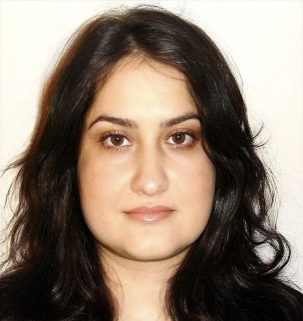
Elena BOGAN
Elena Bogan is a PhD lecturer at the Department of Human and Economic Geography, Faculty of Geography, University of Bucharest, Romania; Education background: University of Bucharest, graduated in 2003; Master degree in 2005; PhD Degree in Geography in 2008; Work experience: Faculty of Geography, University of Bucharest since 2008; Current and previous research interests: urban and rural tourism, heritage tourism, management of tourist accommodation structures, human and economic geography, territorial planning and management. Memberships of professional societies: Professional Association of Geographers from Romania (APGR), since 2016; Geographical Society of Romania (SGR), since 2004.
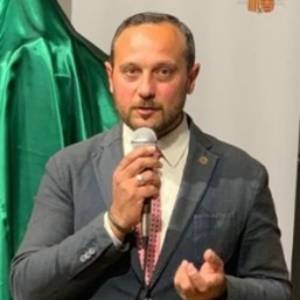
Luca BORRIELLO
Luca Borriello graduated Cultural anthropology and History of contemporary art. He has a PhD in Knowledge and valorization of cultural heritage. He has taught at university and he is a manager for public, private profit and non-profit organizations, in the fields of culture and creativity. He is director of INWARD National Observatory on Urban Creativity. He has coordinated numerous projects, including: the first national scientific research on urban creativity in Italy for the Ministry of Culture; the network of 93 Apulian municipalities for the regional law for the valorization of street art; the first National Technical Roundtable on Urban Creativity for the Presidency of the Council of Ministers; the first Urban Creativity Table of Experts for ANCI, the national association of Italian municipalities; the first Study Center on Urban Creativity, at the Suor Orsola Benincasa University of Naples; the Territorial Center for Urban Creativity CUNTO with the Vodafone Foundation; the first national network of ACU Associations for Urban Creativity; Oculus, the first national training for young urban creativity operators, supported by the Department of Youth Policies. He was artistic curator of urban creative systems, such as: the Parco dei Murales of Ponticelli; the Rione dei Murales of Gianturco; CREAV - Railway system of urban creativity; ISAAC with the University of Naples “Federico II”; Voluminosa with the Municipality of Palma Campania; Sannio Falanghina Street Art for the Campania Region; ASSAFÀ - A Social Street Art Festival Affair, for the Municipality of Naples; Ad Majolica - Diffuse Museum of Street Art Majolica for the Campania Region; HollAndMe - Dutch Street Art in Six Italian Cities for the Embassy and Consulate General of the Netherlands in Italy. He was a thematic speaker at TEDx 2017 and has more than thirty publications. He is scientific advisor to SAUC journal.
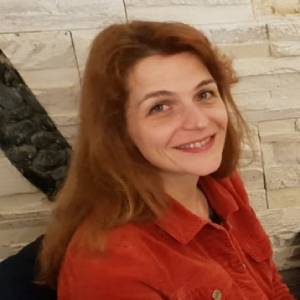
Isabelle DUMONT
Isabelle Dumont is Associated Professor of Political and Economic Geography at the Roma Tre university (Italy) since 2014. After having made his entire course of study in Geography at the University of Caen (France) obtaining the PH.D. in 2002, she has then been Research Fellow for 8 years (Université de Caen, Università di Parma and Università Roma Tre). She is “chercheuse associée” at ESO-Caen (the Social Geography Laboratory of University of Caen) and member of the Maison de la Recherche en Sciences Humaines of Caen, as well as member of various Italian geographical associations (SGI, AGEI, SSG and CISGE). She has more than 100 publications in various domains. Her main research areas are: marginality in urban and rural contexts and solutions to address it (social innovation models, such as social cooperatives, community cooperative and “resident enterprise”); environmental issues (circular economy, sustainable living, abandoned & polluted industrial sites); geographical performativity of TV series and audio-dissemination; street art as an instrument of institutional planning or spontaneous expression of collective movements. More specifically, she investigates why sometimes street art seems to be a springboard for requalification and why sometimes it seems to fuel resentment or aggressive reactions. Alongside this personal research, since 2008 she has promoted a series of annual international congresses/workshops of Social Geography in Italy, France and Spain.

Sara GIOVANSANA
Sara Giovansana is a PhD student in Geographical Sciences at the Catholic University of the Sacred Heart in Milan, Italy. She graduated in Languages and Cultures for International Communication and Cooperation (Japanese and German languages and cultures) from the University of Milan. She is a member of AGeI (Associazione dei Geografi Italiani/Association of Italian Geographers), SSG (Società di Studi Geografici/Society of Geographical Studies) and AIIG (Associazione Italiana Insegnanti di Geografia/Italian Association of Geography Teachers) and is also a member of the AGei research groups "Geographies of Innovation and Information" and "Decolonial Geographies". Her research interests include urban regeneration and redevelopment; (de-)industrialization; gentrification dynamics; geography and cinema; geography and literature; cancel culture; street art.
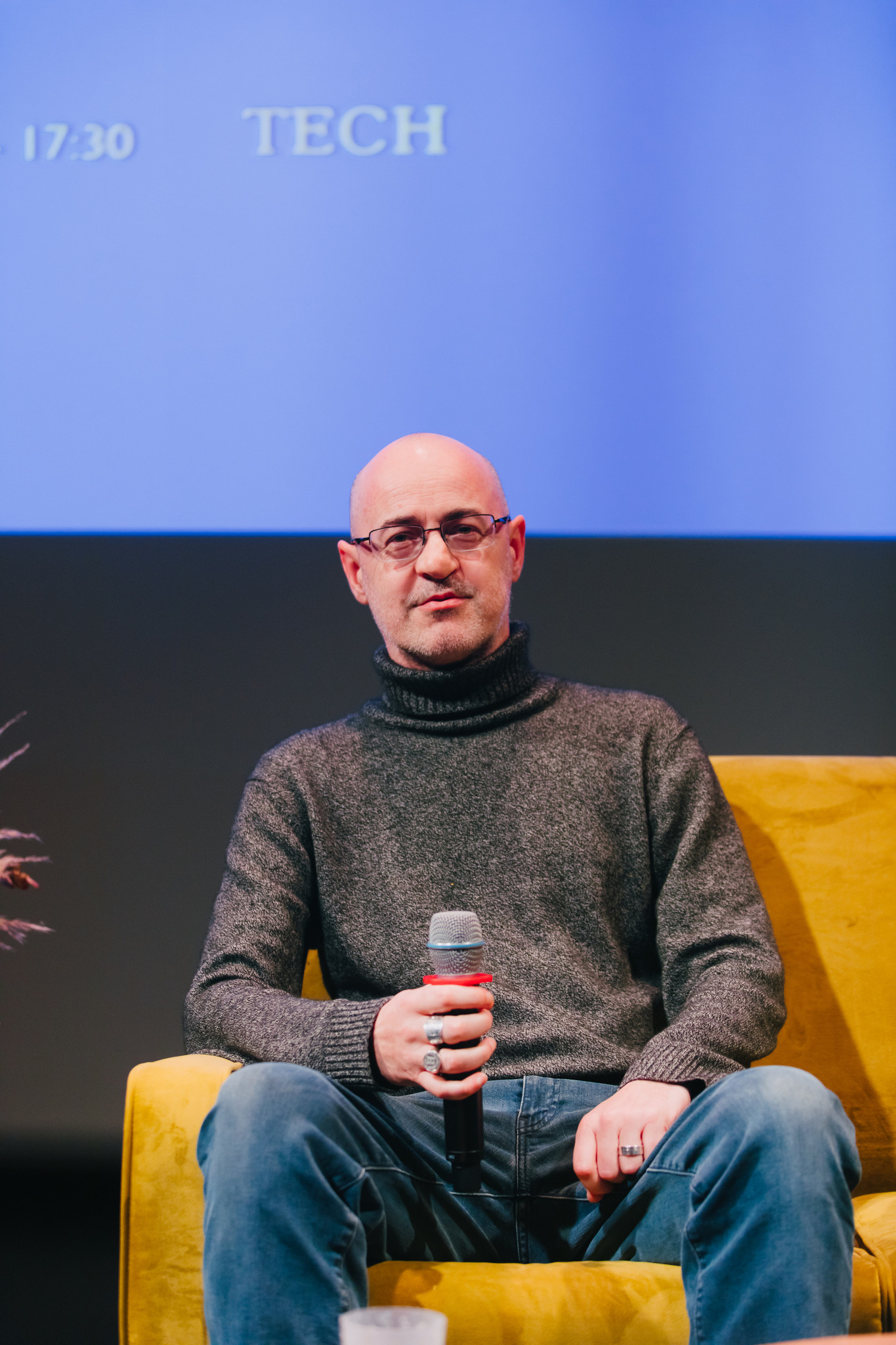
Alexandre GRONDEAU
Alexandre Grondeau is University Professor of geography and planning, deputy director of the TELEMMe laboratory at Aix-Marseille University-CNRS. He is the organizer of the conferences "Another way of making the city", the co-founder of the City in Transitions Observatory of the Mediterranean House of Human Sciences and the author of the books: Urban Geography (republished by Hachette Superior in 2020) and Altermétropolisation, another city is possible (LST Editions). He is the author of numerous academic articles dealing with cities in globalization, alternative environments and territories. He works in particular on the conceptualization and definition of altermetropolisation by mobilizing the notions of social innovation, common goods, responsive city, new right to the city, social and solidarity economy, heterotopia, circular economy, street art, chrono urbanism and slow urbanism. As part of this research work on altermetropolisation, Alexandre Grondeau has developed several study programs on the impact and importance of Street Art in the cities of Marseille and Lisbon (photo credit: Cédric Dusquesnoy).

Patrycja GRZYŚ
Patrycja Grzyś is a human geographer by profession and urban junkie by heart. Currently, she is a Research Assistant and PhD Researcher at the Department of Regional and Social Geography, University of Łódź in Poland: confessing the principle that the city cannot be closed in schemes and its perception goes far beyond from the visual, aesthetic experience; treating cities as stories of how such a complex organism influences on human behavior and what emotion it triggers. In her doctoral dissertation she explores the role of grassroots initiatives in the process of producing urban space. She is author of works on urban identity and urban creativity. Her research interests mainly concern social aspects of functioning of urban organisms and human role in their transformation.
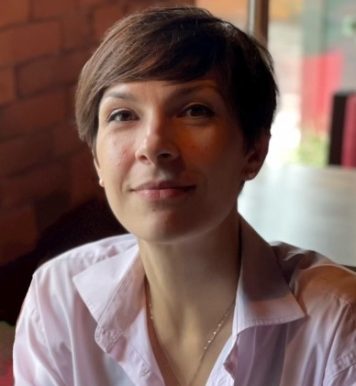
Zosia KAIS
Zosia Kais is PhD and teaches in Philosophy Department from Igor Sikorsky Kiev Polytechnic Institute, Ukraine. She has more than 15 years of research. She participated in graffiti & street art events and festivals, in collecting materials, interview and communication inside Ukrainian graffiti community. In 2015 she had the dissertation defense at Hryhoriy Skovoroda Institute of Philosophy of the National Academy of Sciences of Ukraine with the subject "Social semantics of urban world: symbolic of graffiti". She had public lectures and discussions on graffiti, including in cultural hubs. Her research topics are focused among others on graffiti as the phenomenon of communication and retrospective from drawings of ancient caves, inscriptions on the walls to modern inscriptions and drawings. She explores graffiti in three dimensions: common social, artistic and social protest.

Monika KROPEJ
Monika Kropej is a graffiti and street art researcher who has been involved in this field for more than 15 years. Her main research area is political graffiti and street art in Slovenia and the Balkans, particularly antiauthoritarian and anti-fascist graffiti and street art. She has also been studying political graffiti and street art “battles”. In recent years, her research has expanded to include public opinion on graffiti and street art in Slovenia, conducting research on two public opinion surveys on the topic in Slovenia. With the emergence of new AI generative tools, Monika Kropej has been exploring ways to incorporate these technologies into graffiti and street art studies. She is employed at the International Research Centre on Artificial Intelligence under the auspices of UNESCO and at the Centre for Knowledge Transfer in Information Technologies at the Jozef Stefan Institute, Slovenia.
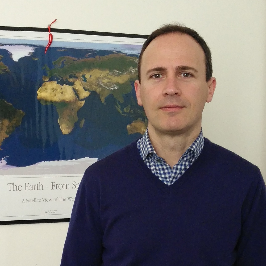
Paolo MOLINARI
Paolo Molinari is Full Professor of Human Geography at the Catholic University of the Sacred Heart in Milan, Department of Modern and Contemporary History. He is a collegiate member of the PhD Programme of "Sciences of Person and Education" at the Catholic University of Milan, Italy. He was Visiting Professor at the Universities of Paris Est Marne-la-Vallée and Paris Diderot. Among his present offices, he is member of the Executive Committee of the Association internationale de géographie francophone (AIGF), President of the Lombardy branch of the Italian Association of Geography Teachers (AIIG), and a member of the scientific committee of the Maison des Sciences de l'Homme Lyon St-Etienne (France). Concerning his main research topics, urban and social geography, the housing problem, urban peripheries, social inclusion, geographical education and citizenship education must be mentioned.

Laima NOMEIKAITE
Laima Nomeikaite is a researcher, human geographer, and artist. She has a cotutelle-PhD degree in cultural studies from Roskilde University and the University of Southeast Norway with the title "Street art, heritage and more-than-representational approaches". She has previously worked on a number of projects related to culture, heritage research and urban planning, including as an urban planner in the private sector in Norway and at the Norwegian Institute for Cultural Heritage Research (NIKU). She also has a background as a curator and artist. She together with her friends have led for several years the festival "Matgilde mot Hungersnød" (Feast against Famine) in Bergen and has taken part in several artistic projects, including the improvisation company "På Stående Fot" led by choreographer Kristine Nilsen Oma.
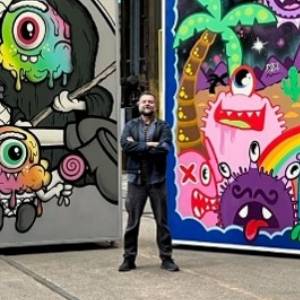
Vjeran PAVLAKOVIĆ
Vjeran Pavlaković is a Professor of History and Cultural Studies at the University of Rijeka, Croatia. He received his Ph.D. in History in 2005 from the University of Washington and has published articles on memory politics in Southeastern Europe, transitional justice in the former Yugoslavia, and Yugoslav volunteers in the Spanish Civil War. He is a co-editor of the volume Framing the Nation and Collective Identity in Croatia (Routledge, 2019), which was re-issued in Croatian in 2022. He was the lead researcher on the Memoryscapes project as part of Rijeka’s European Capital of Culture in 2020 and a co-founder of the Cres Summer School on Transitional Justice and Memory Politics, as well as a researcher for Rijeka/Fiume in Flux. Current research includes graffiti and murals as sites of memory, slow memory and Balkan conflicts, and a history of Dalmatian immigrants in the American Southwest.
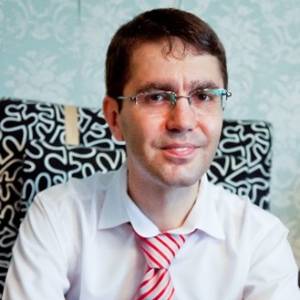
Radu SĂGEATĂ
Radu Săgeată is Senior Researcher at the Institute of Geography, Romanian Academy and Associate Professor at "Ion Mincu" University of Architecture and Urbanism, Bucharest, Romania. Education background: University of Bucharest (graduated in 1995); Master degree (in 1996); PhD Degree in Geography (2004) with the thesis intitled "Political-administrative function of the human settlements and the organization of geographical space. Lessons learned from Romania" (published in 2006) for which he received the distinction "Magna cum Laudae". Field of competence: regional development and territorial planning, human and regional geography, settlements systems, urban and rural geography, political geography and geopolitics, cultural geography, historical geography. He is the author or co-author of 50 scientific books and of over 200 scientific articles published in journals indexed in international and national databases. He is member of several international and national professional associations and organizations.
Paulina TOBIASZ-LIS
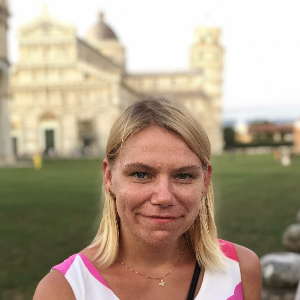
Paulina Tobiasz-Lis is a PhD academic teacher and researcher at the Department of Regional and Human Geography of the University of Łódź, Poland. She is human geographer and spatial planning specialist. During recent years, her main research was focused on socio-spatial changes of urban and rural areas and their perceptions. She is author of two monographs and a few dozen of research papers in human geography. She has participated in Horizon 2020 projects: RELOCAL – Resituating the Local in Cohesion and Territorial Development (2016-2021); DESIRA – Digitization: Economic and Social Impacts in Rural Areas (2019-2023); ESPON 2020 project: PROFECY - "Processes, Features and Cycles of Inner Peripheries in Europe" (2016-2017) and also several projects under the National Science Center Funding Scheme, Poland, including one focused on socio-spatial contrasts in the city of Łódź. Currently, representing the city of Łódź, she is involved in the project FACE UP - Factory Cities of Europe – United in Partnership under the CERV – Citizens, Values, Rights and Values Program and ADV – AgriData Values under Horizon Europe Program.
Srđan TUNIĆ
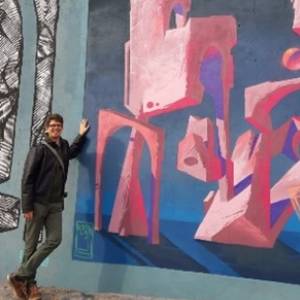
Srđan Tunić is a freelance curator, art historian, and cultural manager. At the moment he is a PhD student at Temple University in Philadelphia, USA. He holds degrees from the University of California, Davis (MA in Art History, 2023), the University of Arts in Belgrade (MA in Cultural Management and Policy, 2017), and the University of Belgrade (BA in Art History, 2008). Starting from 2013, Srđan has been researching graffiti, street art and murals, mostly through Mediterranean projects such as INFILTRI and Trans-Cultural Dialogues (DJART’14 festival). He is one of the founders of Street Art Walks Belgrade / STAW BLGRD project and a member of Street Art Belgrade team. His current area of research is activism, queer street art, Serbian contemporary art scene, and participatory murals. His texts have been published by Routledge, SAUC (Street Art & Urban Creativity Scientific Journal), KULTURA journal, Život Umjetnosti, Uneven Earth, SEEcult, among others.